
As seen on Open Homes Australia Season 4 and Australia’s Best House Season 3


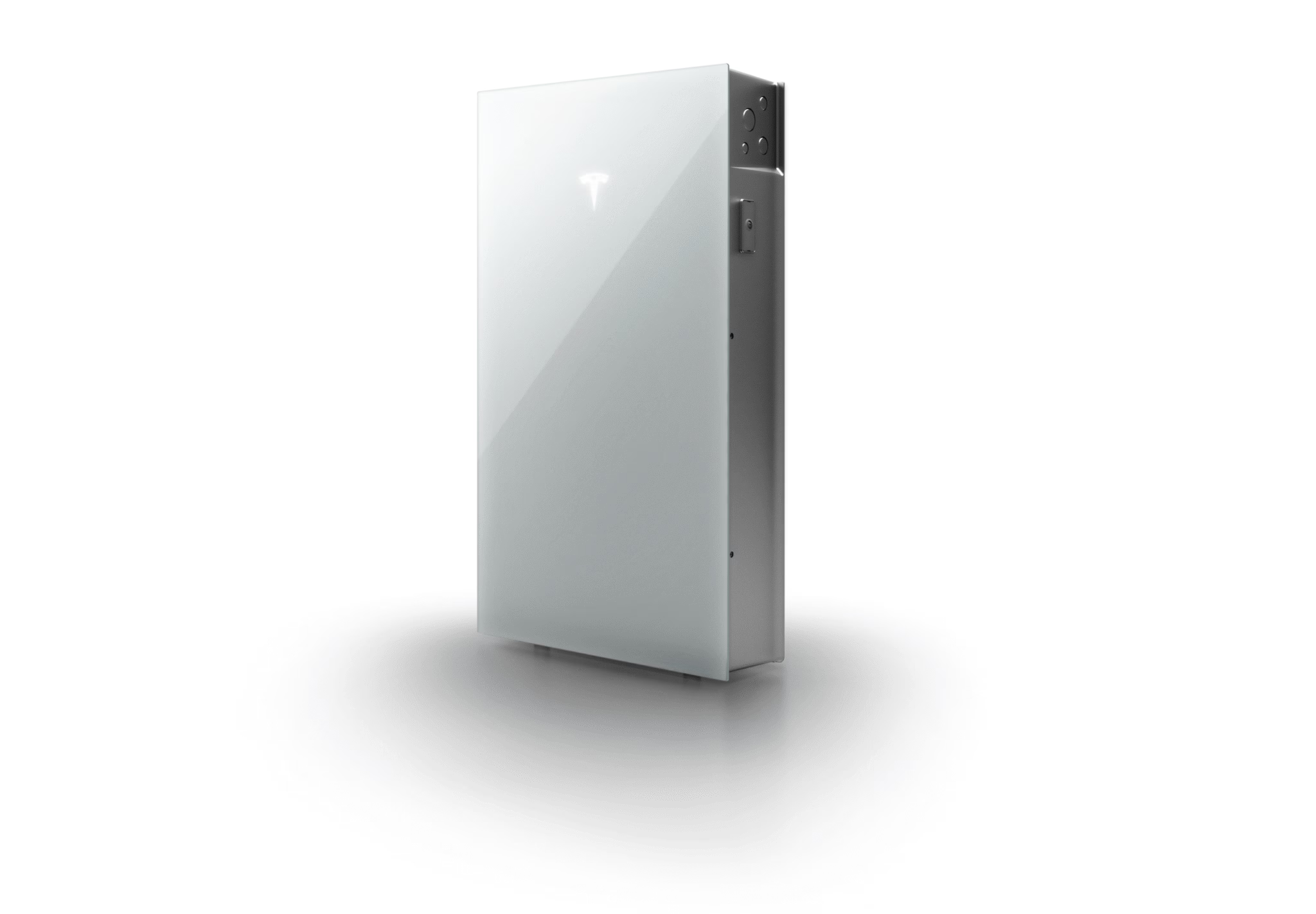
Powerwall 3 is Tesla’s latest home battery. The big change from Powerwall 2 is that it now has a solar inverter built in, so your solar panels can plug straight into the battery. No separate solar inverter on the wall.
One Powerwall 3 stores 13.5 kWh and can run at up to 11.04 kW continuously. Paired with Tesla’s Backup Gateway 2, that’s enough to back up the whole house in a blackout for most homes. It can go in with new solar panels or be added to an existing solar system, and if you need more storage later you can add up to three Powerwall 3 Expansions.
It’s not perfect, and we don’t pretend it is. It’s heavy, it can’t be added to an existing Powerwall 2, and in our own testing it came in below the high voltage batteries on round-trip efficiency. Our verdict and test results below show you exactly where it shines and where it doesn’t.
Yes. We have been installing Powerwall 3 since October 2024.
Fill in the contact form below and our team will design a system for your home.
No. Powerwall 3 can only be paired with other Powerwall 3 units and Powerwall 3 Expansions. It’s not compatible with Powerwall 2.
10 years, the same as Powerwall 2.
Reviewed by Mark Cavanagh, owner of MC Electrical. Last updated October 2026.
Powerwall 3 is the simplest way to get a large whole-home backup battery with a solar inverter built in. One unit stores 13.5 kWh, delivers up to 11.04 kW continuously, and can take up to 20 kW of solar panels directly. The trade-offs are its weight (130 kg) and that it can only be expanded with Tesla’s own Powerwall 3 Expansions.
Pros
Cons
MC Electrical is a Tesla Certified Installer. Our own full-time electricians have been installing Tesla Powerwall batteries across Brisbane and South East Queensland since 2017, from Powerwall 2 through to Powerwall 3 and its Expansions.
| Product | Units installed | Years | Battery storage |
|---|---|---|---|
| Tesla Powerwall 2 | Over 45 | 2017 to 2024 | Over 607 kWh |
| Tesla Powerwall 3 | Over 145 | October 2024 to July 2026 | Over 1,957 kWh |
| Powerwall 3 Expansion | Over 98 | September 2025 to July 2026 | Over 1,323 kWh |
| Total | Over 288 Tesla Powerwall units | 2017 to July 2026 | Over 3,888 kWh |
That’s over 145 Powerwall 3s in our first two years of installing them, and over 98 Powerwall 3 Expansions in our first year.
We also install the Tesla Backup Gateway 2 that gives Powerwall its whole-home blackout protection, with over 177 installed since 2021.
Source: MC Electrical job records, to July 2026. Storage calculated at 13.5 kWh per Powerwall 2, Powerwall 3 and Powerwall 3 Expansion.
A good fit if you:
Consider another option if you:
| Usable energy | 13.5 kWh (14 kWh total) |
| Continuous output | 5, 10 or 11.04 kW (48 A maximum continuous current) |
| Motor start | 185 A locked rotor amps |
| Charge rate | 5 kW (8 kW with Expansions in a future firmware update) |
| Solar input | Up to 20 kW DC, 3 MPPTs, 60 to 550 V DC, up to 30 A per MPPT |
| Efficiency | 97.5% solar to home; 89% solar to battery to home |
| Expansion | Up to 3 Powerwall 3 Expansions (13.5 kWh each), floor stacked; up to 7 units per system |
| Dimensions | 1105 x 609 x 193 mm (Expansion 1105 x 609 x 168 mm) |
| Weight | 130 kg (Expansion 110 kg) |
| Water and dust rating | IP55 enclosure; IP67 battery and power electronics |
| Operating temperature | -20 to 50°C (may derate above 40°C) |
| Noise | Under 50 dB(A) typical at 1 m |
| Installation | Indoor or outdoor; floor or wall mounted |
| Backup | Whole-home backup with Backup Gateway 2 |
| Connectivity | Wi-Fi, Ethernet, 4G; Tesla app |
| Warranty | 10 years |
| Grid connection | 230 V single phase, 50 Hz; AS/NZS 4777.2 compliant |
Source: Tesla Powerwall 3 Australian datasheet. Last checked October 2026.
We measure round-trip efficiency ourselves: we charge each battery, discharge it, and log how much energy actually comes back out. High voltage batteries need only a small DC conversion; low voltage batteries need a large one, which costs more energy as heat.
| Battery type | Battery | Slow round trip1 | Fast round trip2 |
|---|---|---|---|
| High voltage | BYD | 81% | 89.4% |
| High voltage | Fronius Reserva | 80.5% | 90.2% |
| High voltage | Fox ESS (H3 Smart inverter + EQ4800 battery) | 73.84% | 86.6% |
| High voltage | SAJ | 79.9% | 89.0% |
| Low voltage | FranklinWH* | 81.3% | 87.8% |
| Low voltage | Tesla Powerwall 3 | 70.9% | 84% |
| Low voltage | Sigenergy | 62.9% | 80.3% |
| Low voltage | Anker | 65.4% | 80.5% |
| Low voltage | Huawei | 59.4% | 83.1% |
1 Slow test: charge at 100% of inverter capacity, discharge at 3% of inverter capacity.
2 Fast test: charge and discharge at the inverter’s maximum capacity.
* FranklinWH had an advantage with a 5 kW inverter, a 300 W discharge and a 6% discharge rate.
Tesla Powerwall 3 measured 84% on our fast test and 70.9% on our slow test. Tesla’s datasheet quotes 89% (solar to battery to home, at a 3.3 kW charge and discharge rate). Because Powerwall 3 uses a low voltage battery, it needs a larger DC conversion than high voltage batteries such as Fronius Reserva, and that conversion costs some energy as heat.
Every battery in this table is tested the same way, at our warehouse test facility or on a real home install. We charge the battery, discharge it, and use a power logger to measure the energy going in and the energy coming back out. Round-trip efficiency is the energy out divided by the energy in, so it shows how much of your stored solar you actually get to use. For example, a battery with 73% round-trip efficiency gives you back about 7.3 kWh for every 10 kWh you put in.
We run two tests on each battery:
Why the battery type column matters: batteries store DC (direct current) electricity, and your home runs on AC (alternating current). High voltage batteries only need a small DC-to-DC conversion before the inverter turns it into AC. Low voltage batteries need a much bigger conversion, and every conversion loses some energy as heat. Many low voltage batteries also have a DC-to-DC converter inside every battery module. Each converter has a running cost, a bit like a car engine idling, whether you’re using much power or not. In our testing that was roughly 70 W per module. On a big stack running a small night-time load, those running costs add up, a bit like leaving a bathroom heat lamp on 24 hours a day. That’s why the high voltage batteries in our table generally score higher, especially in the slow test.
We say so when we get it wrong: while testing a large modular battery in 2026, we found that setting the slow test by inverter size alone didn’t tell the whole story for batteries with a converter in every module. What matters is how much power each module is handling. A six-module stack discharged at 300 W came out in the low 40s for round-trip efficiency, while the same stack at 900 W came out at about 67%. We published what we found, and it changed our advice: choose a battery sized to your home rather than the biggest stack you can fit.
Keeping it fair: where a system could not be tested at exactly the same rate as the others, we mark it with an asterisk and explain why. For example, the FranklinWH result has an asterisk because its 5 kW inverter meant our 300 W load worked out to a 6% discharge rate instead of 3%, which gave it an advantage in the slow test.
Independent results: manufacturers sometimes help with the cost of a test unit or travel, but they never get a say in what we publish. We’ve turned down reviews when a brand wanted that kind of influence.
Only systems we’ve tested ourselves: every result comes from a system we installed and measured. If the exact model on a page has not been tested yet, we say which model we did test.
Testing at both ends shows how a battery performs in a real home, not just the best-case figure on a datasheet. Manufacturer efficiency figures are often measured on the battery alone, which is one reason our whole-system results are lower.
Source: MC Electrical in-house round-trip efficiency testing, 2026.
| Tesla Powerwall 3 | Fronius Reserva (with GEN24 Plus) | Fox ESS Power Cube | |
|---|---|---|---|
| Usable capacity | 13.5 kWh per unit | 6.31, 9.47, 12.63 or 15.79 kWh per tower (2 to 5 modules of 3.15 kWh) | 10.92 to 49.14 kWh (2 to 9 EQ5500 modules of 5.46 kWh) |
| Expanding later | Add up to 3 Powerwall 3 Expansions (13.5 kWh each) per Powerwall 3 | Add modules to a tower (up to 5), or up to 4 towers in parallel | Add EQ5500 modules (up to 9) |
| Inverter | Built in | Separate Fronius Primo or Symo GEN24 Plus hybrid inverter | Built in |
| Inverter sizes | 5, 10 or 11.04 kW continuous | Set by the GEN24 Plus inverter chosen | 5, 8, 10 or 12 kW single-phase; 5 to 15 kW three-phase |
| Solar input | Up to 20 kW DC, 3 MPPTs | Set by the GEN24 Plus inverter chosen | Up to 200% of inverter rating, 4 MPPTs (2 on the 5 kW single-phase model) |
| Efficiency (manufacturer) | 89% solar to battery to home; 97.5% solar to home | 95% battery efficiency | Battery round trip greater than 95% |
| Water and dust rating | IP55 enclosure; IP67 battery and electronics | IP65 | IP65 |
| Weight | 130 kg (Expansion 110 kg) | 86.5 kg (6.31 kWh) to 187 kg (15.79 kWh) | Inverter 35 kg plus battery modules |
| Operating temperature | -20 to 50°C (may derate above 40°C) | -20 to 55°C | Inverter -25 to 60°C; battery charges 0 to 55°C |
| Cell chemistry | Not stated on datasheet | Lithium iron phosphate (LFP) | Lithium iron phosphate (LFP) |
| Warranty | 10 years | 10 years (to 70% state of health) | 10 years |
| Status at MC Electrical | Available now | Available now | Awaiting Clean Energy Council (CEC) approval |
Figures are taken from each manufacturer’s current Australian datasheet. Last checked October 2026.
Is the Tesla Powerwall 3 overhyped or is it actually worth it? In this review, Mark and Ben break down the Tesla Powerwall 3 – the standout features, the potential flaws, and everything you need to know before considering it for your home.
0:34 The Tesla Powerwall 3 in a Fish Tank
1:00 Difference Between the Tesla Powerwall 2 and Tesla Powerwall 3
1:59 Why get a Solar Battery if you already have a Solar System?
3:41 Price breakdown: Tesla Powerwall 3 is Cheap?!
6:27 How the Tesla Powerwall 3 makes backup cheaper
7:40 The Downside to the Tesla Powerwall 3

Mark Cavanagh is the owner of MC Electrical. He started his career as a 16-year-old apprentice electrician at Energex, then worked in residential and commercial electrical before completing his first solar install in 2009.
In 2012, frustrated that nobody had real, comparative data on solar products, Mark started buying and testing panels, inverters and batteries himself at our warehouse test facility and publishing the results on Mark’s Blog. That testing has since earned invitations to inverter and battery factories to sit down with the engineers behind the products, minus the sales spin.
Today Mark presents battery reviews on the MC Electrical YouTube channel with solar consultant Yorick Mark. In one two-year period alone, they made four trips to China and visited seven battery manufacturers, then installed and tested the most promising systems side by side. Manufacturers sometimes help with the cost of a test unit or flights, but Mark’s rule is that they get no say in what is published, and he has turned down reviews when a brand wanted that influence. He lives with the technology too: his own home runs a 15 kW Fronius inverter with 48 kWh of battery storage.
Under Mark, MC Electrical has installed over 14,000 solar systems of various brands, including over 5,590 Fronius inverters, and has teams installing over a thousand solar systems a year. MC Electrical is a Tesla Powerwall Certified Installer, a Master Electricians member and an NETCC Approved Retailer, and every installer is a full-time employee, never a subcontractor.
Visit our showroom in Eagle Farm, Brisbane and discover what’s possible for your property.