
As seen on Open Homes Australia Season 4 and Australia’s Best House Season 3


The Fox ESS Power Cube is an all-in-one home battery. The inverter sits on top of a stack of battery modules in one floor-standing unit, so there are fewer boxes on the wall and a simpler install.
It stores your spare solar during the day so you can use it at night, and its built-in gateway (up to 63 A) can back up the whole house in a blackout. It also has a built-in heater to keep the batteries working well in cooler weather.
The Power Cube comes in single-phase models from 5 to 12 kW and three-phase models from 5 to 15 kW, and every model lets you connect up to twice as much solar as the inverter size (200% PV oversizing). Storage starts at 10.92 kWh and can grow to 49.14 kWh by stacking more EQ5500 battery modules, so you can add capacity later.
On safety, Fox says every battery module has insulation between the cells and its own fire-suppression aerosol unit. It’s rated IP65, so it can go indoors or outdoors, and you can keep an eye on it with the Fox Cloud 2.0 app over Wi-Fi, LAN or Bluetooth.
The Power Cube is waiting on final approval from the Clean Energy Council (CEC), which is expected soon. Register your interest using the form below and we’ll let you know as soon as it’s approved.
Both. Single-phase models range from 5 to 12 kW and three-phase models from 5 to 15 kW.
From 10.92 kWh up to 49.14 kWh. Each EQ5500 battery module adds 5.46 kWh, and you can add more modules later.
Yes. The built-in gateway supports full-home backup of up to 63 A when the grid goes down.
Yes. The Power Cube is rated IP65, so it can be installed indoors or outdoors.
The Power Cube comes with a 10-year product warranty.
The final technical datasheet will be added here once the CEC approval is confirmed.
Reviewed by Mark Cavanagh, owner of MC Electrical. Last updated October 2026.
The Fox ESS Power Cube puts a hybrid inverter and stackable battery modules into one floor-standing unit, with single-phase and three-phase versions and full-home backup through a built-in 63 A gateway. On paper it’s one of the most flexible all-in-one systems coming to Australia. It’s still awaiting Clean Energy Council (CEC) approval, so this is an early verdict based on the specifications and our first trial install.
Our honest take so far: the Power Cube is a really impressive bit of kit. A 50 kWh battery with a 15 kW inverter takes up only about twice the space of a Fronius Verto Plus inverter on its own. The thing we’re keeping an eye on is heat. Batteries hate getting cooked, and there’s a reason most brands haven’t packed a big inverter and a battery stack together this tightly. That’s one of the reasons we’re starting with a trial rather than diving straight in.
Pros
Cons
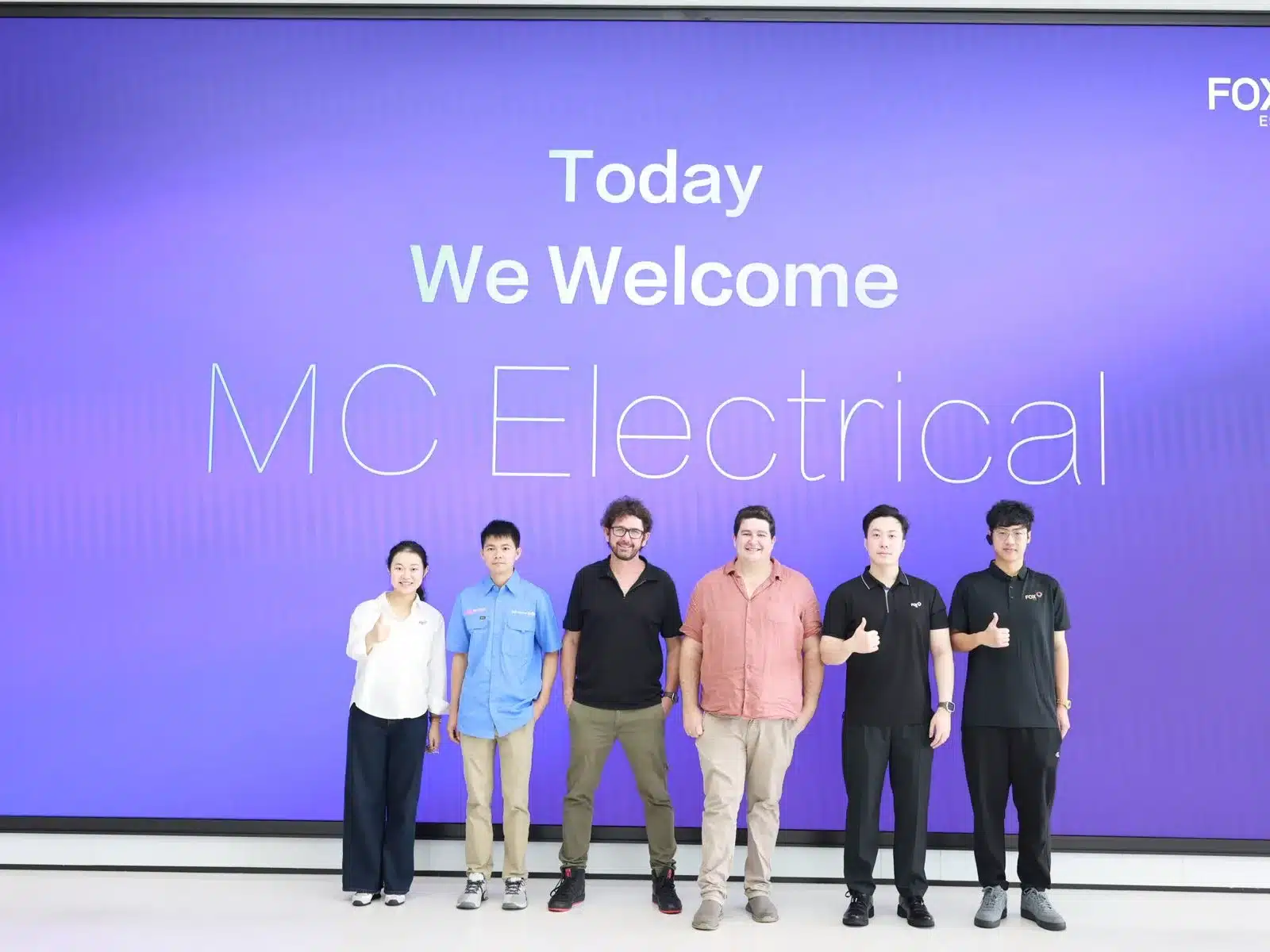
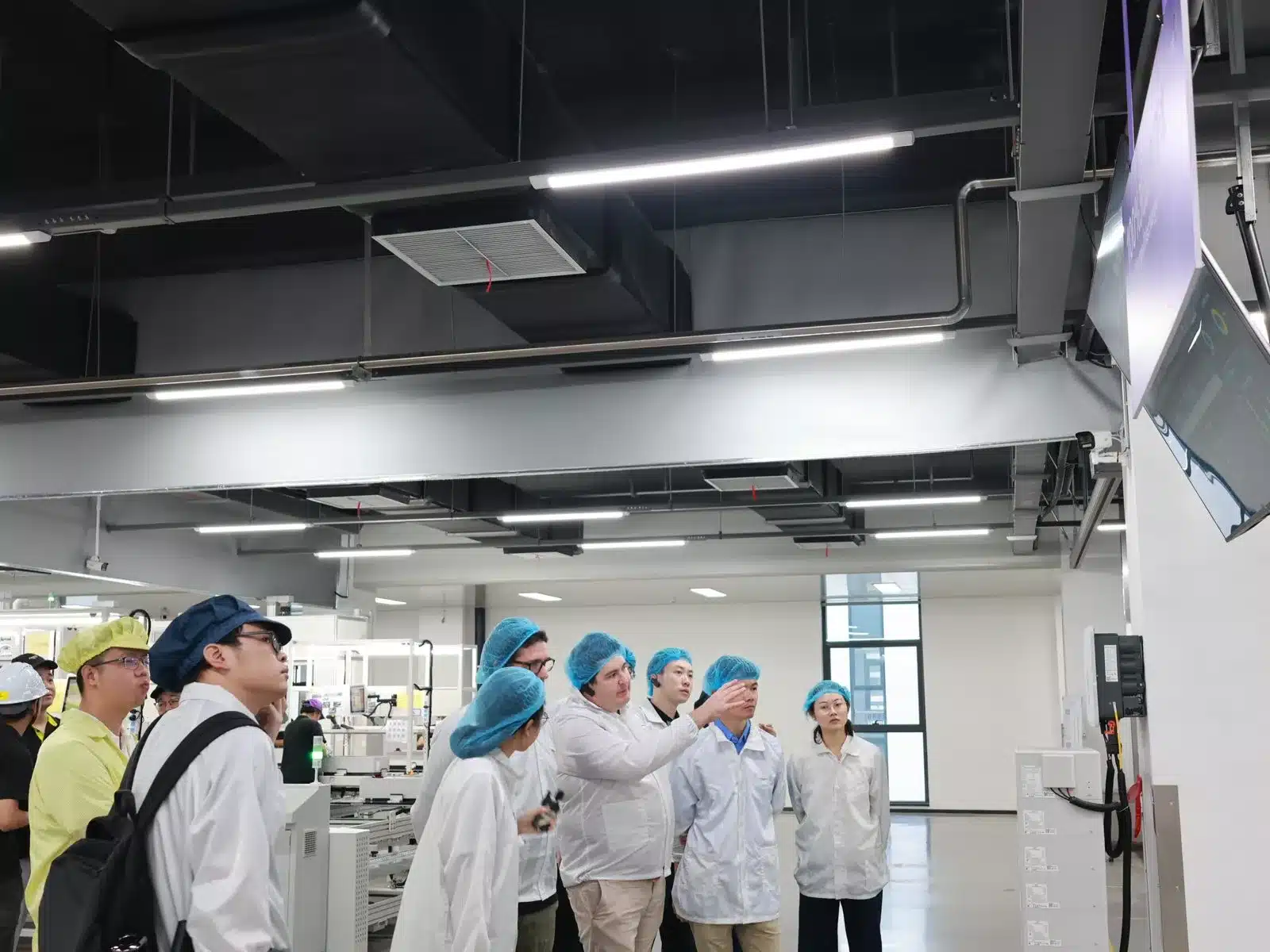
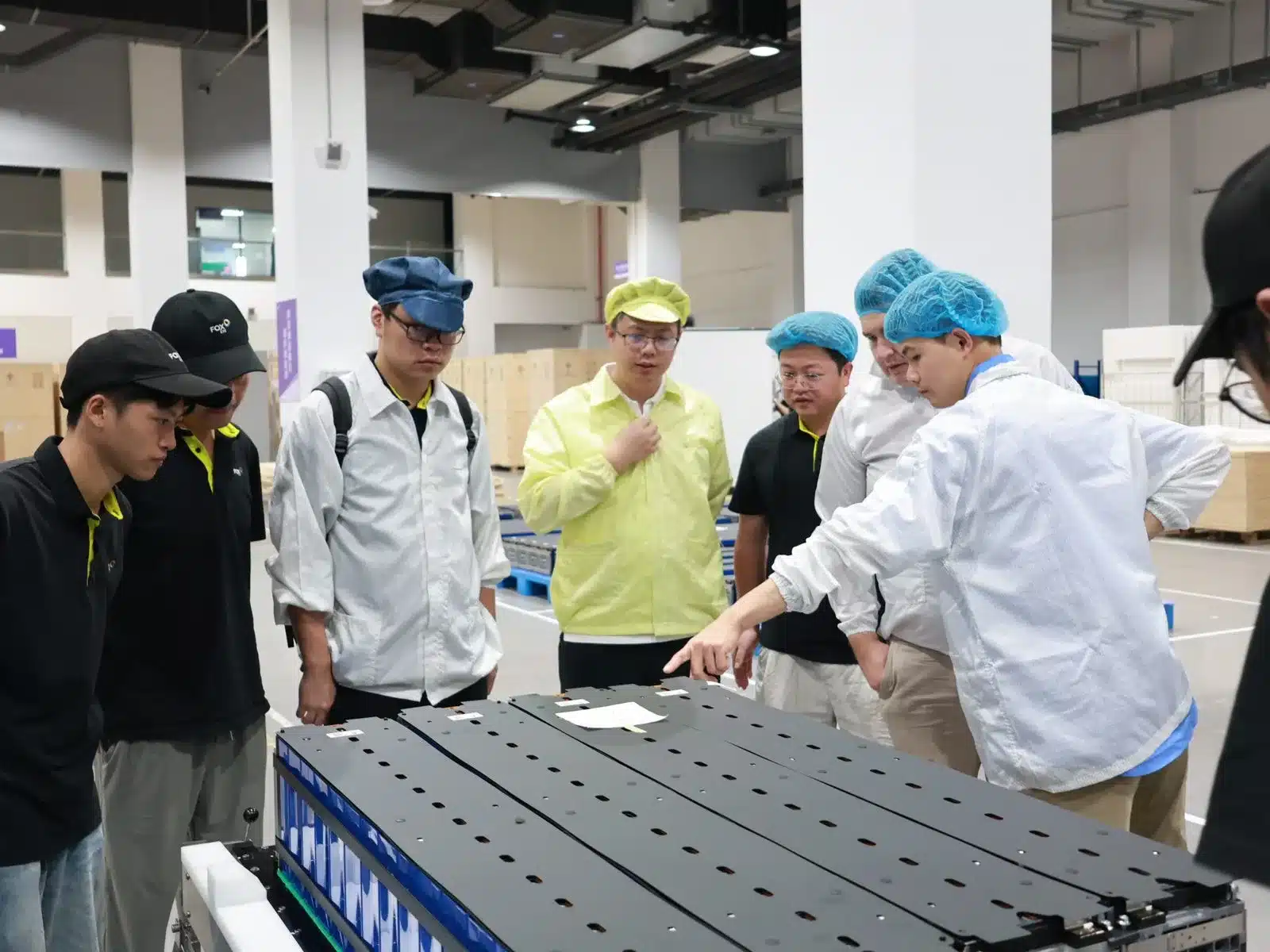
We’ve seen Fox ESS up close. In January 2026, our team visited Fox ESS in Wenzhou, China. We toured their inverter and battery production lines and testing areas, and sat down with their engineering team to ask the hard questions about build quality, safety and support. Before the trip, in December 2025, we installed a Fox ESS H3 Smart inverter with an EQ4800 battery so we could test it ourselves.






A good fit if you:
Consider another option if you:
| Inverter models | Single-phase: 5, 8, 10 or 12 kW. Three-phase: 5 to 15 kW |
| Battery modules | EQ5500, 5.46 kWh each, 2 to 9 modules |
| Storage capacity | 10.92 to 49.14 kWh |
| Solar input | Up to 200% of inverter rating; 4 MPPTs (2 on the 5 kW single-phase model); up to 20 A per MPPT; 600 V maximum |
| Backup | Built-in gateway, up to 63 A, full-home on-grid backup; 4 ms switchover |
| Battery efficiency | Round trip greater than 95%; 100% depth of discharge (manufacturer figures) |
| Cell chemistry | Lithium iron phosphate (LFP) |
| Inverter size and weight | 570 x 420 x 380 mm; 35 kg (single-phase) |
| Water and dust rating | IP65; indoor or outdoor; floor mounted |
| Operating temperature | Inverter -25 to 60°C (derates from 45°C); battery charges 0 to 55°C and discharges -10 to 55°C |
| Safety | Two-level protection from cell to pack, inter-cell insulation and an aerosol unit in each battery module; AFCI |
| Connectivity | Wi-Fi, LAN, Bluetooth, optional 4G; LCD touch screen; Fox Cloud 2.0 app with FoxBot AI |
| Other | Meter-free CT support, VPP compatible, generator support, dry contact |
| Warranty | 10 years |
| Status | Awaiting CEC approval |
Source: Fox ESS Power Cube and EQ5500 Australian datasheets and Fox ESS product information. Figures may change once the CEC-approved datasheet is published. Last checked October 2026.
| Tesla Powerwall 3 | Fronius Reserva (with GEN24 Plus) | Fox ESS Power Cube | |
|---|---|---|---|
| Usable capacity | 13.5 kWh per unit | 6.31, 9.47, 12.63 or 15.79 kWh per tower (2 to 5 modules of 3.15 kWh) | 10.92 to 49.14 kWh (2 to 9 EQ5500 modules of 5.46 kWh) |
| Expanding later | Add up to 3 Powerwall 3 Expansions (13.5 kWh each) per Powerwall 3 | Add modules to a tower (up to 5), or up to 4 towers in parallel | Add EQ5500 modules (up to 9) |
| Inverter | Built in | Separate Fronius Primo or Symo GEN24 Plus hybrid inverter | Built in |
| Inverter sizes | 5, 10 or 11.04 kW continuous | Set by the GEN24 Plus inverter chosen | 5, 8, 10 or 12 kW single-phase; 5 to 15 kW three-phase |
| Solar input | Up to 20 kW DC, 3 MPPTs | Set by the GEN24 Plus inverter chosen | Up to 200% of inverter rating, 4 MPPTs (2 on the 5 kW single-phase model) |
| Efficiency (manufacturer) | 89% solar to battery to home; 97.5% solar to home | 95% battery efficiency | Battery round trip greater than 95% |
| Water and dust rating | IP55 enclosure; IP67 battery and electronics | IP65 | IP65 |
| Weight | 130 kg (Expansion 110 kg) | 86.5 kg (6.31 kWh) to 187 kg (15.79 kWh) | Inverter 35 kg plus battery modules |
| Operating temperature | -20 to 50°C (may derate above 40°C) | -20 to 55°C | Inverter -25 to 60°C; battery charges 0 to 55°C |
| Cell chemistry | Not stated on datasheet | Lithium iron phosphate (LFP) | Lithium iron phosphate (LFP) |
| Warranty | 10 years | 10 years (to 70% state of health) | 10 years |
| Status at MC Electrical | Available now | Available now | Awaiting Clean Energy Council (CEC) approval |
Figures are taken from each manufacturer’s current Australian datasheet. Last checked October 2026.
We measure round-trip efficiency ourselves: we charge each battery, discharge it, and log how much energy actually comes back out. High voltage batteries need only a small DC conversion; low voltage batteries need a large one, which costs more energy as heat.
| Battery type | Battery | Slow round trip1 | Fast round trip2 |
|---|---|---|---|
| High voltage | BYD | 81% | 89.4% |
| High voltage | Fronius Reserva | 80.5% | 90.2% |
| High voltage | Fox ESS H3 Smart inverter + EQ4800 battery | 73.84% | 86.6% |
| High voltage | Fox ESS Power Cube (all-in-one) | Currently being tested | Currently being tested |
| High voltage | SAJ | 79.9% | 89.0% |
| Low voltage | FranklinWH* | 81.3% | 87.8% |
| Low voltage | Tesla Powerwall 3 | 70.9% | 84% |
| Low voltage | Sigenergy | 62.9% | 80.3% |
| Low voltage | Anker | 65.4% | 80.5% |
| Low voltage | Huawei | 59.4% | 83.1% |
1 Slow test: charge at 100% of inverter capacity, discharge at 3% of inverter capacity.
2 Fast test: charge and discharge at the inverter’s maximum capacity.
* FranklinWH had an advantage with a 5 kW inverter, a 300 W discharge and a 6% discharge rate.
The Fox ESS result above (73.84% slow, 86.6% fast) is from the Fox ESS H3 Smart inverter with EQ4800 high voltage battery that we installed and tested, not the new Power Cube all-in-one. We have now installed our first Power Cube as a trial at a test home.
Our next step with Fox ESS: We’ve installed and tested 2 Fox ESS systems so far. Neither has had a single failure, and one has been running for nearly a year. But two systems isn’t enough to judge a brand on, so we’re trial installing 50 Power Cubes in real homes before it becomes part of our standard range.
Every battery in this table is tested the same way, at our warehouse test facility or on a real home install. We charge the battery, discharge it, and use a power logger to measure the energy going in and the energy coming back out. Round-trip efficiency is the energy out divided by the energy in, so it shows how much of your stored solar you actually get to use. For example, a battery with 73% round-trip efficiency gives you back about 7.3 kWh for every 10 kWh you put in.
We run two tests on each battery:
Why the battery type column matters: batteries store DC (direct current) electricity, and your home runs on AC (alternating current). High voltage batteries only need a small DC-to-DC conversion before the inverter turns it into AC. Low voltage batteries need a much bigger conversion, and every conversion loses some energy as heat. Many low voltage batteries also have a DC-to-DC converter inside every battery module. Each converter has a running cost, a bit like a car engine idling, whether you’re using much power or not. In our testing that was roughly 70 W per module. On a big stack running a small night-time load, those running costs add up, a bit like leaving a bathroom heat lamp on 24 hours a day. That’s why the high voltage batteries in our table generally score higher, especially in the slow test.
We say so when we get it wrong: while testing a large modular battery in 2026, we found that setting the slow test by inverter size alone didn’t tell the whole story for batteries with a converter in every module. What matters is how much power each module is handling. A six-module stack discharged at 300 W came out in the low 40s for round-trip efficiency, while the same stack at 900 W came out at about 67%. We published what we found, and it changed our advice: choose a battery sized to your home rather than the biggest stack you can fit.
Keeping it fair: where a system could not be tested at exactly the same rate as the others, we mark it with an asterisk and explain why. For example, the FranklinWH result has an asterisk because its 5 kW inverter meant our 300 W load worked out to a 6% discharge rate instead of 3%, which gave it an advantage in the slow test.
Independent results: manufacturers sometimes help with the cost of a test unit or travel, but they never get a say in what we publish. We’ve turned down reviews when a brand wanted that kind of influence.
Only systems we’ve tested ourselves: every result comes from a system we installed and measured. If the exact model on a page has not been tested yet, we say which model we did test.
Testing at both ends shows how a battery performs in a real home, not just the best-case figure on a datasheet. Manufacturer efficiency figures are often measured on the battery alone, which is one reason our whole-system results are lower.
Source: MC Electrical in-house round-trip efficiency testing, 2026.
We don’t just read the spec sheets. In our videos, Mark and Yorick walk through what we like and what we don’t like about Fox ESS, from our factory visit in China to the system we installed and tested ourselves. Watch the videos below to find out more.



Mark Cavanagh is the owner of MC Electrical. He started his career as a 16-year-old apprentice electrician at Energex, then worked in residential and commercial electrical before completing his first solar install in 2009.
In 2012, frustrated that nobody had real, comparative data on solar products, Mark started buying and testing panels, inverters and batteries himself at our warehouse test facility and publishing the results on Mark’s Blog. That testing has since earned invitations to inverter and battery factories to sit down with the engineers behind the products, minus the sales spin.
Today Mark presents battery reviews on the MC Electrical YouTube channel with solar consultant Yorick Mark. In one two-year period alone, they made four trips to China and visited seven battery manufacturers, then installed and tested the most promising systems side by side. Manufacturers sometimes help with the cost of a test unit or flights, but Mark’s rule is that they get no say in what is published, and he has turned down reviews when a brand wanted that influence. He lives with the technology too: his own home runs a 15 kW Fronius inverter with 48 kWh of battery storage.
Under Mark, MC Electrical has installed over 14,000 solar systems of various brands, including over 5,590 Fronius inverters, and has teams installing over a thousand solar systems a year. MC Electrical is a Tesla Powerwall Certified Installer, a Master Electricians member and an NETCC Approved Retailer, and every installer is a full-time employee, never a subcontractor.
We’ve installed over 14,000 solar systems of various brands, and we’re an ultra-conservative company when it comes to the brands we put our name to, because aftersales and warranty support are of the utmost importance to us and our customers. That’s why we’re only installing 50 Fox ESS systems to start with, as a trial to test their longevity, quality and aftersales support before we make Fox ESS part of our standard range.
If you would like one of those 50 systems, get it installed by a premium installer with a well-developed relationship with Fox ESS. Our direct relationship with the Fox ESS team means better aftersales support for you if you ever need it.
Fill out the contact form below and our team will be in touch to talk through the right Fox ESS system for your home.
Visit our showroom in Eagle Farm, Brisbane and discover what’s possible for your property.